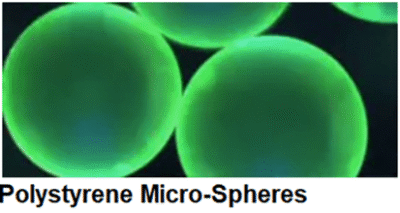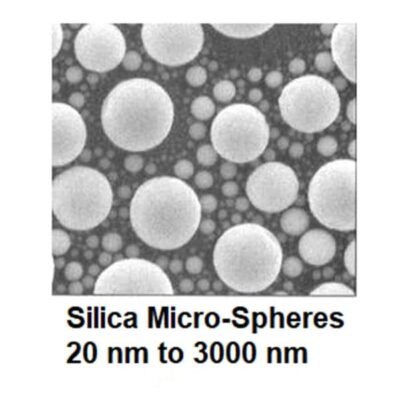
Description
What SURF-CAL Particle Size Standards Do
An uncalibrated wafer scanner cannot be trusted to report accurate particle size data in your contamination control goals. If your Scanning Surface Inspection System reports a clean wafer when particle contamination is present, or detects particles not actually on the wafer surface, every process decision downstream is built on bad data. That direct affects IC yield, throughput and audit compliance.
SURF-CAL Particle Size Standards give metrology and process engineers a verified reference point. You deposit these
NIST-traceable PSL spheres onto a bare silicon wafer and run it through your SSIS tool. The tool must detect and
accurately size each particle. If it can’t, you have a calibration problem, not a process problem. That distinction is
worth identifying early.
Key Specifications
| Parameter | Value |
|---|---|
| Material | Monodisperse polystyrene latex (PSL) |
| Available diameters | 0.047 μm, 0.064 μm, 0.083 μm, 0.092 μm, 0.100 μm, 0.126 μm, 0.155 μm, 0.202 μm, 0.204 μm, 0.220 μm, 0.304 μm, 0.360 μm, 0.498 μm, 0.802 μm, 0.809 μm, 1.112 μm, 2.01 μm, 3.04 μm |
| Standard concentration | 3 × 10⁸ particles/mL |
| High concentration | 1 × 10¹⁰ particles/mL (select sizes — B suffix variants) |
| Volume | 50 mL per bottle |
| Carrier fluid | Deionized, filtered water |
| Density | ~1.05 g/cm³ |
| Refractive index | 1.59 at 589 nm (25°C) |
| NIST traceability | Yes, diameter calibrated by TEM or optical microscopy, traceable to NIST reference materials |
| Standards compliance | SEMI M52, SEMI M53 |
| Storage temperature | 2°C to 8°C — refrigerate; do not freeze |
| Ready to use | Yes (No dilution required) |
Available Particle Sizes
Every particle diameter in this product line corresponds to a calibration node defined by the International Technology Roadmap for Semiconductors (ITRS) and required by major SSIS instrument manufacturers for establishing size response curves. Sub-100 nm sizes (0.047 μm – 0.092 μm): Used for qualifying the most sensitive detection thresholds on modern deep-UV and laser-based inspection tools. The 0.047 μm and 0.064 μm standards are among the smallest commercially available NIST-traceable PSL spheres and are critical for advanced node fabs operating at 28 nm and below. 100 nm – 220 nm range (0.100 μm – 0.220 μm): The most widely specified calibration band in semiconductor fabs. These sizes verify scanner linearity across the mid-range detection window and are required for periodic tool qualification under SEMI M52 protocols. 300 nm – 1.1 μm range (0.304 μm – 1.112 μm): Used for scanner uniformity checks, multi-tool matching across a facility, and calibrating inspection tools on non-critical layers where larger contaminant thresholds apply. 2.01 μm and 3.04 μm: Applied in legacy process nodes and for optical scanner qualification where defect detection sensitivity targets are less aggressive. High Concentration Solutions (1 × 10¹⁰ particles/mL — “B” suffix): The high concentration format is designed for applications using a Differential Mobility Analyzer (DMA) or other size-exclusionary deposition techniques. Available for sizes up to 1.112 μm.
Applications, Who Uses CRM SURF-CAL Standards?
Periodic SSIS calibration and SPC monitoring. IC Fabs use these size standards on a scheduled basis typically weekly or at defined process intervals to verify their scanner’s size response curve has not drifted. A calibrated scanner generates statistically reliable particle count data that supports Statistical Process Control (SPC) decision-making on the production line. Multi-tool and cross-site matching. When the same film or wafer type runs across multiple SSIS tools or across multiple fab locations all tools must produce consistent particle size response data. Depositing the same SURF-CAL size on identical wafers and comparing tool outputs confirms whether scanner-to-scanner variation falls within acceptable limits. Process change validation. Any significant process change new chemistry, new equipment, modified film stack requires re-qualification of the metrology tools used to monitor it. SURF-CAL standards provide the verified reference wafers needed to demonstrate scanner sensitivity before and after the process change. Equipment qualification after service. After a laser replacement, detector service, or optical realignment, the SSIS must be re-qualified before returning to production use. SURF-CAL calibration wafers prepared from these standards confirm the tool is back within specification.
NIST Traceability and SEMI Compliance
Each SURF-CAL particle size standard lot is calibrated using Transmission Electron Microscopy (TEM) or optical microscopy, with measurements traceable directly to National Institute of Standards and Technology (NIST) reference materials. A Certificate of Analysis (CoA) documenting the certified mean diameter and uncertainty for each lot ships with every order. These size standards are developed in accordance with SEMI M52 the industry specification governing reference materials for calibrating particle detection performance in SSIS tools and SEMI M53, which defines procedures for the characterization of the detection sensitivity of automated wafer inspection equipment. NIST traceability is not a marketing label here. It is an auditable chain of particle size calibration that links your scanner qualification records back to a nationally recognized measurement standard. That chain is what your quality management system requires.
Ordering and Storage
Selecting your concentration: The 3 × 10⁸ particles/mL standard concentration works for all conventional deposition methods including nebulizer-based deposition systems. The 1 × 10¹⁰ particles/mL high concentration format is required when using a Differential Mobility Analyzer (DMA) or in-line particle size selection hardware. Storage: Refrigerate at 2°C to 8°C. Do not freeze, as freezing disrupts the particle diameter and liquid suspension, which voids the certified size accuracy. Store bottles upright with caps tightly sealed. Mix by gentle hand shaking prior to use; do not use a high-shear vortex. Shelf life: Consult the Certificate of Analysis for lot-specific expiry. Proper refrigeration is required to maintain certified specifications throughout the stated shelf life.
Frequently Asked Questions
What is the difference between standard concentration and high concentration SURF-CAL size standards?
Standard concentration (3 × 10⁸ particles/mL) works with conventional gravity based, particle deposition systems using nebulizers when preparing the solutions to deposit on calibration wafers. High concentration (1 × 10¹⁰ particles/mL) is used with particle deposition systems using a single Differential Mobility Analyzers (DMA) or dual DMA, which filters out unwanted particles above and below a selected particle size before deposition of that particle size diameter. DMA particle deposition delivers a much more narrow size distribution – a tighter monodisperse deposition. Choose the “B” suffix (1 × 10¹⁰ particles/mL ) variant if your deposition system uses DMA technology.
What is the difference between Surf-Cal Size Standards and our CRM 3000 and 4000 Series Particle Size Standards?
Surf-Cal size standards are specifically designed for wafer inspection system and SSIS size response calibration, typically providing a more narrow size distribution with particle sizes ranging from 47 nanometers to 3 microns; which covers the important particle size range of IC contamination control. The 3000 series particle size standards are designed for a broader use in wafer inspection size calibration, atmospheric particle tests, aerosol instrument size calibration, gas particle counter calibration, CNC/CPC calibration, LPC calibration, etc. The 3000 series particles are provided from 20 nanometers to 900 nm, and the 4000 series particles are provided from 1 – 160 microns. Larger particle sizes are available as dry spheres, if needed.
Which particle sizes do I need for calibration of my wafer inspection instrument and SSIS tool?
Your SSIS tool manufacturer’s qualification documentation specifies which particle diameters are required for calibration of the size response curves in your SSIS tool. In general, you need at minimum four sizes, one at your specified lowest particle size sensitivity, a size just above the specified lower limit, one size at the mid-range of the tools size range capability, and one size at the top end of the tools upper end size specification. If your tool is in specification, it should see all 4 size peaks. Each tool has a size bars that collect the particle size data, and if your tool has, for example, 12 size bars, the 1st particle size should fall in the 1st size bar. The largest size should fall into the last size bar. Refer to your tool’s IQ/OQ protocol or contact your instrument manufacturer for the exact sizes required for proper particle size claibration.
Does each bottle come with a Certificate of
Analysis?
Yes. Every SURF-CAL particle standard order includes a Certificate of Analysis documenting the certified mean diameter, measurement uncertainty, lot number, concentration, and NIST traceability chain. This CoA is required documentation for SEMI-Standards M52-compliant wafer scanner qualification records.
Can I use SURF-CAL size standards on patterned wafers to calibrate the size accuracy of patterned wafer inspection systems?
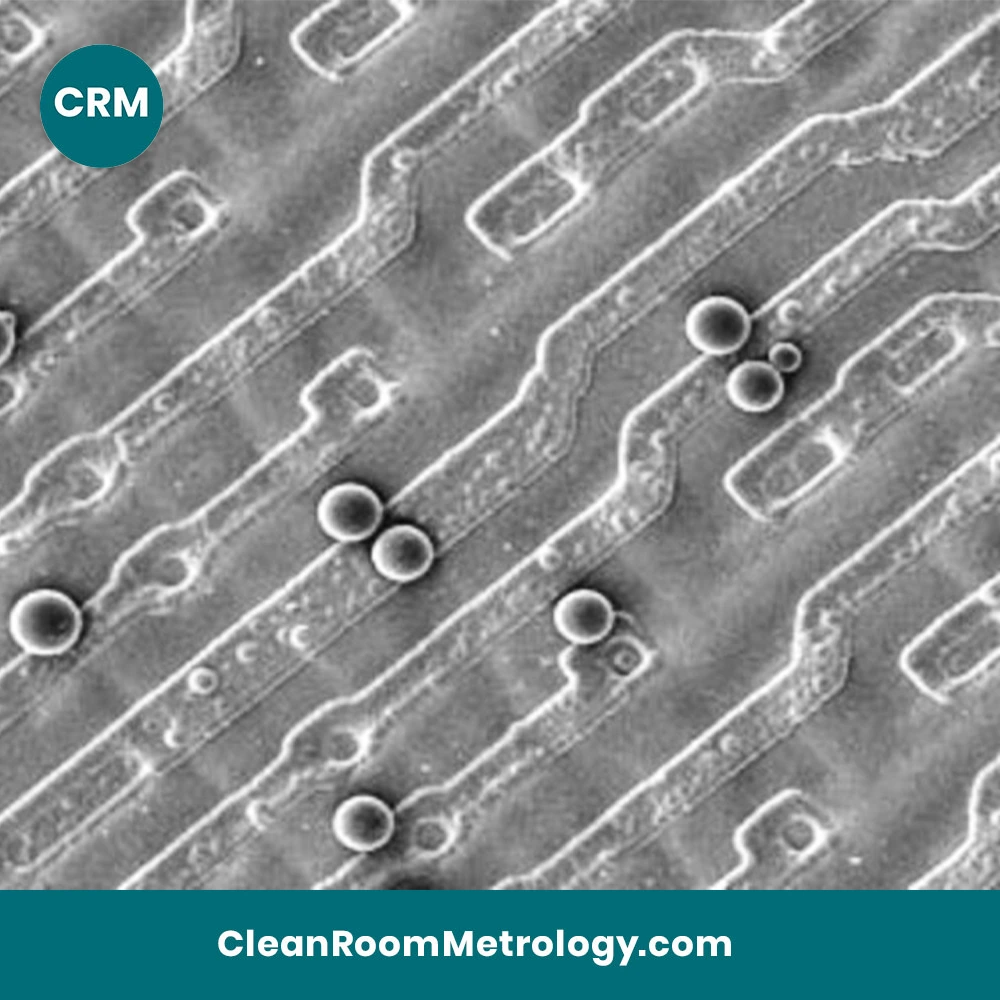
Yes, Surf-Cal particle size standards (Polystyrene Latex or PSL spheres) are typically deposited on patterned wafers to calibrate the size accuracy of KLA, KLA-Tencor, Tencor, Hitachi, ADA, Topcon, etc. patterned wafer inspection systems. These NIST-traceable particles deposited onto the surface of patterned wafers, enable monthly and quarterly size calibration and size response monitoring on SSIS tools. Patterned wafers will typically use larger particles for size calibration; whereas, bare silicon wafer inspection tools will use smaller particle sizes for size response and calibration
What is the shelf life of our SURF-CAL standards?
Shelf life varies by lot. The certified expiry date appears on the bottle label and on the Certificate of Analysis.
Proper cold-chain storage at 2°C to 8°C is required to maintain certified specifications. Do not use expired standards
in calibration records submitted for audit.
What particle deposition method should I use with these NIST™ traceable polystyrene latex spheres (PSL)?
The standard concentration format is compatible with conventional air-spray nebulizer deposition systems at atmospheric
pressure. The high concentration (B) format is designed for DMA-based deposition systems. Spot deposition and full-wafer
deposition are both supported depending on your calibration protocol.
Order Your CRM SURF-CAL Particle Size Standards
Select your particle diameter and concentration from the product variations below. All sizes ship in 50 mL bottles.
Certificates of Analysis are included with every order. In-stock sizes ship within 1-2 Business days.