
Description
AFM24 Cleanroom Fogger
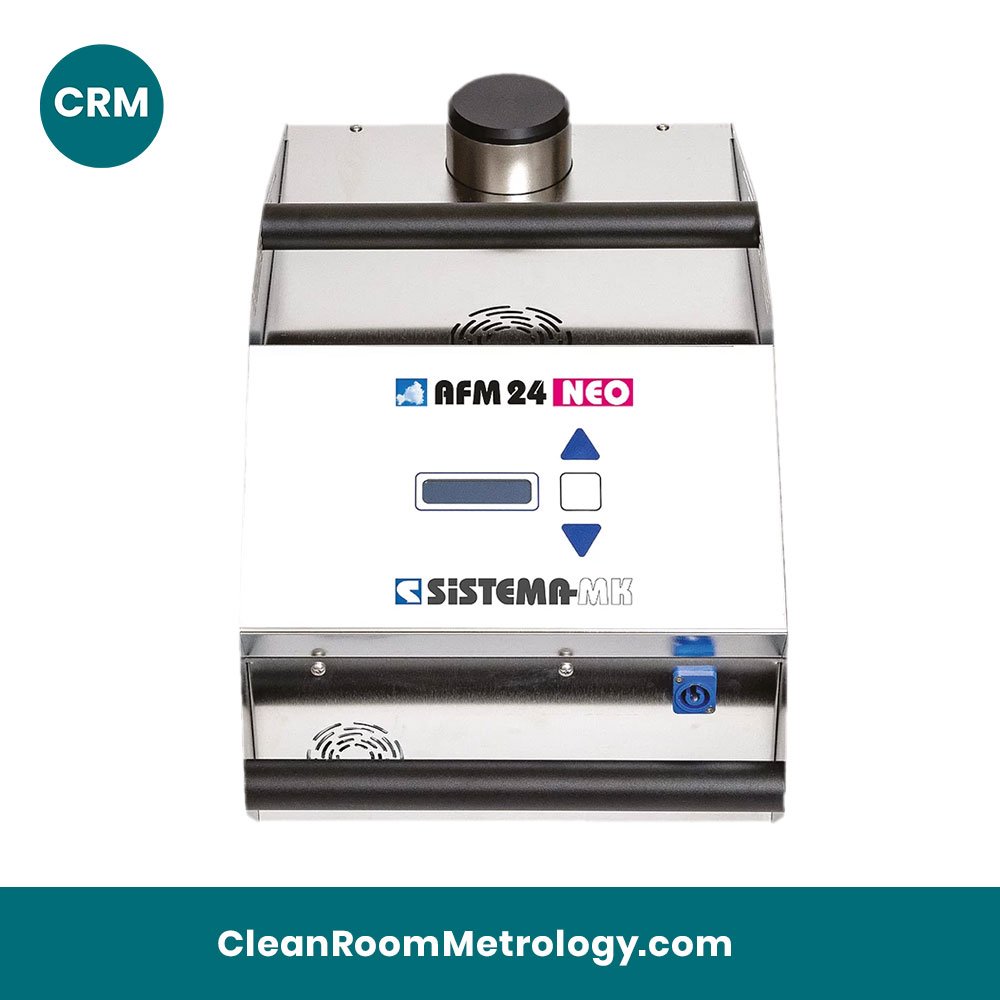
| Fogger Design | AFM24 Cleanroom Fogger for Smoke Studies using De-ionized (DI) water, Sterile water or WFI, Water for Injection to produce a dense, pure fog with 8-10 micron fog droplets using 25 piezo atomizers. AFM24 provide excellent fog volume for smaller smoke studies. Designed with a 316L stainless-steel enclosure with one 80mm Fog Outlet, two Carry Handles and has a 9.5 Liter Water fill. |
| Fog Application | Smoke studies and airflow visualization studies using a pure fog in 2×6′ airflow hoods and fume hoods, BSCs, Glove Boxes and Bio-Safety Cabinets. One 80mm Fog Outlet, adjustable fog velocity and adjustable fog volume with 12 optional fogger accessories to visualize airflow turbulence. |
| Fog Volume | ≈ 0.83 Cubic Meters pure fog per minute, about 45 cubic meters over a typical fog cycle. |
| Fog Duration | about 45 minutes at max fog volume; or 70 minutes at lowest fog volume |
| Visual Airflow Distance | ≈ 8-9 feet using the single 80mm fog outlet |
| Liquids Used | DI (De-ionized) Water, Sterile Water or WFI Water (water for injection) |
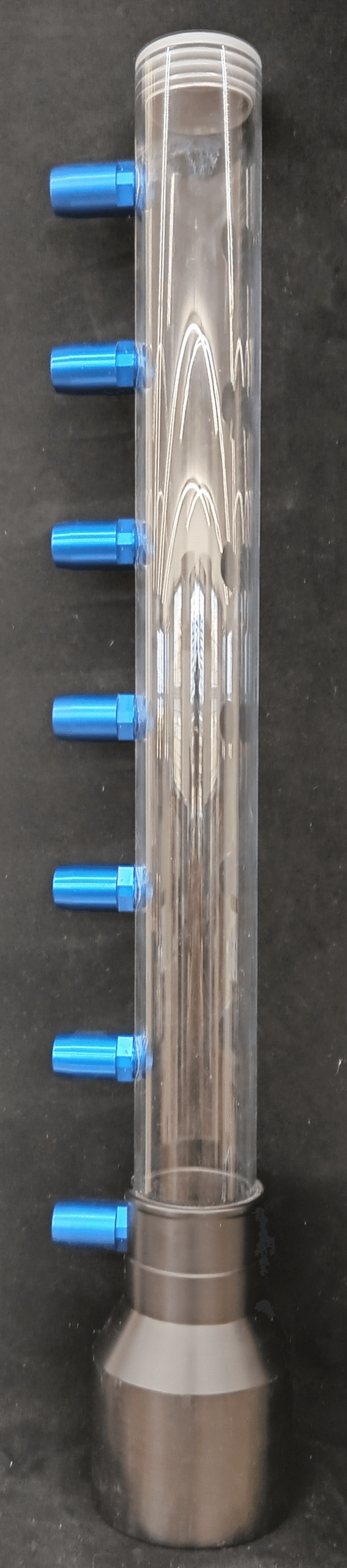
| Optional Accessories | 1.2 M x 80mm Fog Rake, Wireless Remote Control, 5Mx80mm Fog Hose, Rolling Carry Case, 80mm Y adaptor with Butterfly Valves, LED Multi-Color Fog Contrast Light |
| Power | Internal power supply with 115 VAC, 60 Hz; 220 VAC, 50 Hz, 100VAC |
AFM24 Smoke Study fogger produces up to 0.83 cubic meters pure fog per minute for about 45 minutes duration and provides adjustable fog volume and adjustable fog velocity using the touch pad on the front control panel. Fog produced is generated through 25 ultrasonic piezos, creating a breathable fog that is 8-10 microns in diameter. The AFM24 is produced with a 316L electro-polished, stainless steel enclosure, providing two carry handles and a single 80mm fog outlet. The AFM24 Cleanroom Fogger has a 9.5 Liter water fill and is very easy to operate for your smoke studies.
Clean room foggers are often referred to as smoke generators or smoke machines and are used in smoke studies to visualize airflow turbulence and airflow uniformity in semiconductor clean rooms, pharmaceutical process rooms and industrial clean rooms. We provide both ultrasonic foggers using water only to produce a pure fog; as well as LN2 Ultrapure foggers using liquid nitrogen and De-Ionized (DI) water, WFI water or sterile water to produce much higher volumes of ultrapure fog. Below is a selection of smoke generators with performance details for each smoke generator, which you can match to your requirements for your smoke studies.
Compare the operating performance of smoke generators and LN2 cleanroom Foggers. Fogger Comparison
Why does the AFM24 use Touchpad Controls, instead of Touchscreen Controls?
Touchpad Controls on a product are superb in high humidity airflow environments, which makes a Touchpad Control especially valuable when used on a water based cleanroom fogger in high water condensation environments. The Touchpad is a single, water tight interface that does not allow moisture to contact the electrical switches under the control surface. A Touchpad is used on the AFM24 Cleanroom Fogger to control fog velocity, fog volume and mode of operation. The touchpad prevents water condensation, which naturally builds up on the fogger surface during a smoke study, from leaking in and around the touchpad controls. It allows the fogger display to be viewed while keeping moisture away from the control electronics. The entire front control surface of the AFM24 is one pad with touchpad control of all AFM24 functions, keeping water condensation and moisture away from the internal AFM24 electronics. A secondary advantage to using a touchpad control is that a wireless remote receiving antenna can be integrated underneath the touchpad, allowing control of the AFM24 using an optional wireless remote key FOB. This arrangement protects the wireless receiver from humidity and water condensation during the smoke study, which can be a problem for an unprotected, top mounted wireless receiver used in various instruments for remote operation.
Touchscreens are colorful and digitally controlled; but many touchscreen assemblies have an outer bezel and the touchscreen itself, composed of the glass surface and underlying electronics. Many phones and tablets use a capacitive touchscreen. Under the glass surface is a transparent grid of conductive material carrying a tiny electrical charge. Your body also conducts electricity, so when your finger touches the glass, it makes a slight change to the electrical field at that touchscreen location, which controls a function in the instrument. The Touchscreen is installed into a flat surface, and the bezel covers the edges of the opening, allowing the touchscreen to look as if it is integrated into the surface. If the bezel and touchscreen opening are not properly sealed, water condensation and moisture can migrate under the bezel edges and possibly make contact with the electronic PC board under the touchscreen. A capacitive touchscreen detects changes in the electrical field when a finger contacts the screen surface. On a touchscreen without adequate water rejection, moisture on the screen surface may interfere with the detection of one touchscreen button or simultaneously register input at a second touchscreen button in close proximity, causing false touches, missed touches or erratic input into the controls of the product. A capacitive touchscreen can also interpret water droplets or a water film as electrical changes similar to a finger contact. Performance in these conditions depends on the touchscreen design, sealing and control electronics. Lastly, a touchscreen with a glass surface can be broken if mechanical tools accidentally strike the surface of the glass screen.
Our AFM Cleanroom Fogger Quality and Design Excellence
Reviews
There are no reviews yet.