Choose a cleanroom fogger by matching fog output, operating fluids, outlet configuration, and accessories to your airflow visualization study. Compare water-only AFM models with Apollo liquid nitrogen foggers before requesting a quotation.
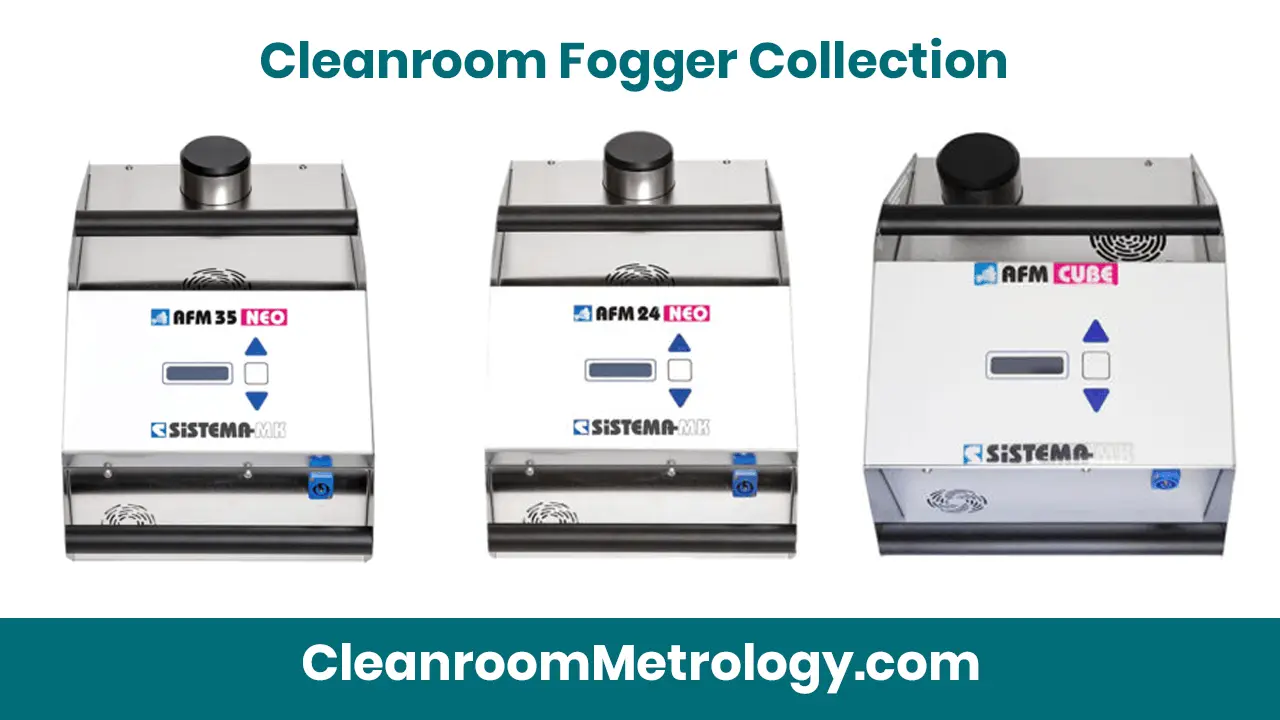
A cleanroom fogger generates visible droplets for smoke studies, helping reveal airflow patterns, turbulence, reverse flow, and dead zones. Cleanroom Metrology LLC supplies equipment for evaluating airflow in controlled environments, including pharmaceutical ISO suites, semiconductor cleanrooms, biological safety cabinets, and barrier isolators.
Which cleanroom fogger type should you choose?
Ultrasonic water foggers
AFM foggers use ultrasonic piezoelectric transducers to produce fog from deionized (DI) water, sterile water, or Water for Injection (WFI). They require no liquid nitrogen. Consider water-only equipment for localized studies in airflow hoods, gloveboxes, biosafety cabinets, and isolators. Match the model’s output to the area you need to visualize.
Liquid nitrogen foggers
Apollo foggers combine liquid nitrogen (LN₂) and water to generate dense fog. Compare these models when your study requires higher fog output. Assess nitrogen availability, handling arrangements, and the manufacturer’s operating requirements alongside the purchase price.
| Buying consideration | AFM water foggers | Apollo LN₂ foggers |
|---|---|---|
| Operating fluids | Approved water source | Approved water source plus LN₂ |
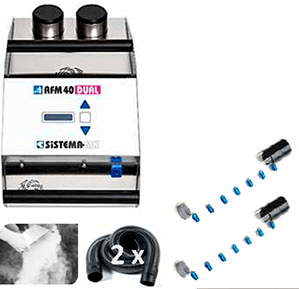
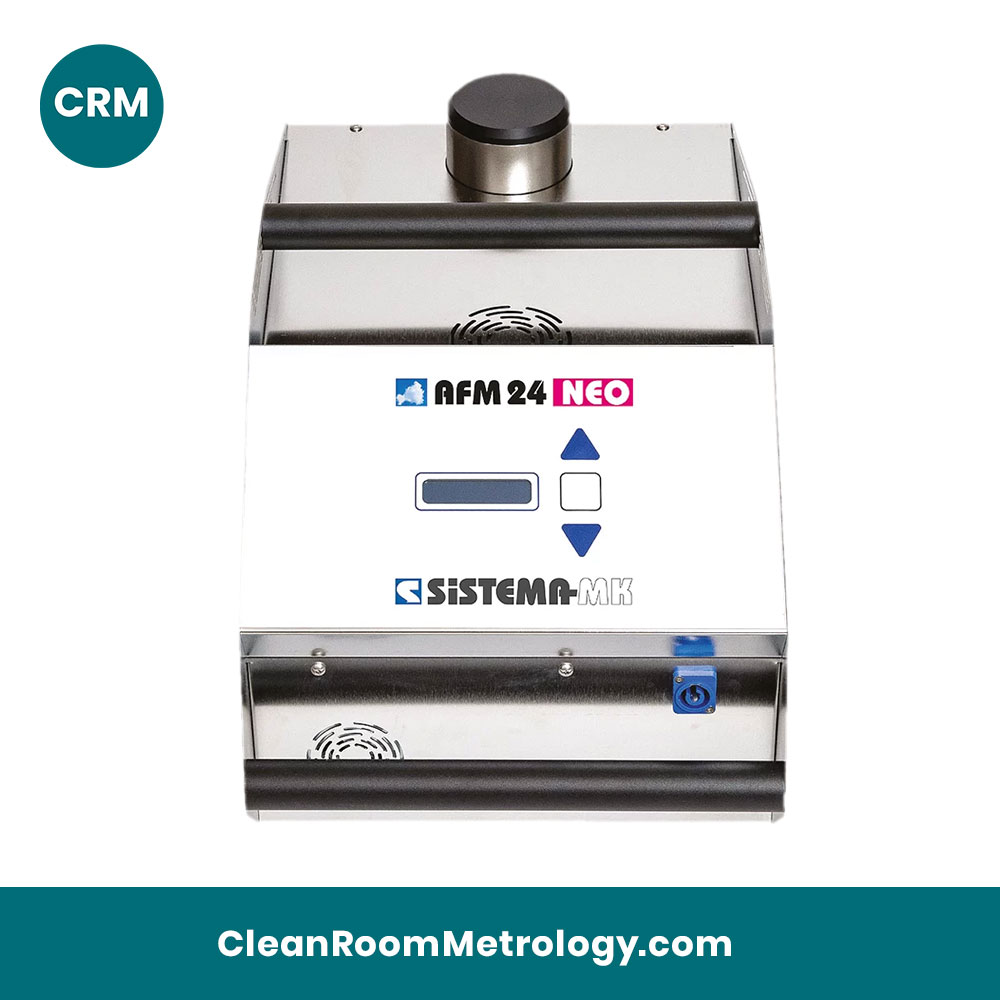
| Example outputs | AFM24: ≈ 0.83; AFM40: ≈ 2 m³/min | Apollo 35: ≈ 5 m³/min |
| What to evaluate | Local coverage and outlet access | Coverage, nitrogen supply and operating cost |
What should you compare before buying?
Study location: Identify the equipment and airflow path being assessed: a laminar flow workbench, restricted access barrier system (RABS), fume hood, or cleanroom suite. Room classification alone does not determine the appropriate fogger.
Output and visibility: Compare fog volume in cubic meters per minute, fog density, and model-specific visual tracking distance. Avoid assuming a higher-output model is automatically better for a confined work area.
Droplet size and release control: Review the stated droplet size and adjustable fog velocity. Select accessories and operating settings appropriate to the airflow pattern being observed.
Operating fluids: Confirm water compatibility and follow cleaning instructions. Portable glycol or glycerin foggers require a separate assessment of fluid compatibility with your process; they should not be treated as interchangeable with water foggers.
Runtime and accessories: Confirm duration at your intended output setting. Specify fog hoses, rakes, doorway nozzles, remote control, and carrying arrangements in your quotation. Verify which accessories are included and their current sizes.
Compare three cleanroom fogger options
Use these published output and outlet specifications to shortlist equipment. Confirm the complete configuration with our team before ordering.

How does the fogger support smoke studies?
Smoke studies visualize airflow uniformity and disruptions around equipment. For aseptic processing, FDA guidance emphasizes evaluation under dynamic conditions, including operator interventions and equipment effects, with documented conclusions. Video recordings help reviewers assess the observed airflow.
Define your protocol around applicable ISO 14644-3, USP <797>, and GMP requirements. A fogger supports airflow visualization; purchasing one does not establish facility compliance, measure pressure differentials, or replace quantitative airflow testing.
Request a cleanroom fogger quotation
Explore our Smoke Studies Fogger collection and send your study dimensions, application, required runtime, available utilities, and accessory needs to Cleanroom Metrology LLC. Request confirmation of model specifications, supplied accessories, lead time, and total cost before placing your order.
Need help choosing a cleanroom fogger? Compare fog output, runtime, and outlets in our Cleanroom Fogger Comparison, call 719-850-4215 for help selecting the right model.